


CONFERENCE INTERPRETER · MUSEUM TRANSLATOR · SOCIAL ANTHROPOLOGIST
SUBTITLER · LITERARY TRANSLATOR
Making Culture Speak. Speak Stevens.
Nearly two decades of translating and interpreting for museums, cultural heritage institutions, publishers, filmmakers and businesses – helping stories travel without losing the world they come from.


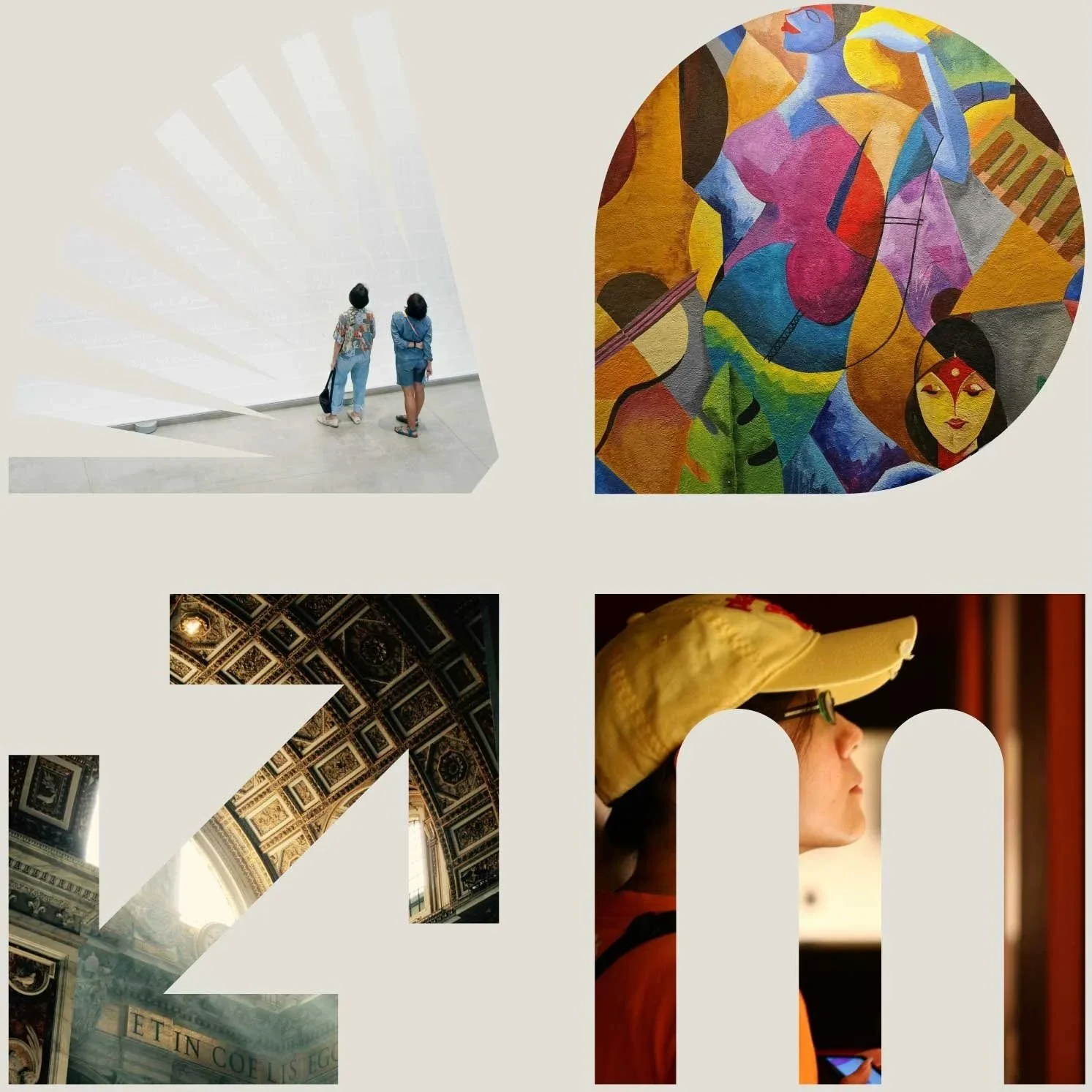
Language. Culture. Storytelling.
Three passions, four kinds of work.
That’s what it’s all about. At least the way I see my job.
Museums, cultural institutions and filmmakers tell stories about people, places, histories and ways of seeing the world. When these stories cross languages, it takes more than finding the right words. It takes an understanding of the culture, context and meaning behind them.
I’m also increasingly drawn to literary translation: the challenge of carrying a writer’s voice, rhythm, and way of seeing into another language.
It feels like a natural extension of the work I’ve always been drawn to – making culture speak.
Four kinds of work, one job.

For museums &
cultural institutions
Exhibition & museum translation
Exhibition texts, catalogues and guides between German and English, for curators and publication managers who need someone fluent in the museum world, not only in the words on the label.

For publishers &
authors
Literary translation
A newer chapter after years of non-fiction and academic work. If you're looking for someone who treats language as craft, I'd welcome the conversation — or the chance to pitch you a book of my own choosing.

For companies &
event managers
Conference & business interpreting
Simultaneous interpreting for conferences, events and meetings — equipment included if you need it. One line on the checklist you can stop thinking about.

For filmmakers
Documentary & film subtitling
Twenty to thirty Austrian documentaries and several feature films subtitled from German into English — some of it dialect that German speakers needed subtitles for too. Spotting, timing and characters-per-line are my problem, not yours.
Selected clients
Austria
Kunsthistorisches Museum, Vienna · Weltmuseum Wien · Museum of Applied Arts, Vienna · Ambras Castle, Innsbruck · Ludwig Boltzmann Society · Austrian Academy of Sciences – Institute for Social Anthropology · University of Vienna – Department of Social and Cultural Anthropology · Austrian Association for Kurdish Studies / European Center for Kurdish Studies
Germany
Staatliche Museen zu Berlin (including CoMuse – The Collaborative Museum, Vorderasiatisches Museum, Ethnologisches Museum at the Humboldt Forum, Museum für Asiatische Kunst at the Humboldt Forum) · Kunsthalle Bremen · Max Planck Institute for Social Anthropology · Martin Luther University Halle-Wittenberg – Department for Anthropology and Philosophy · University of Freiburg – German Department
And a wide range of businesses and organizations across Austria and beyond.
Cultural Intelligence vs. Artificial Intelligence
AI has changed the language industry for good. Like many of my colleagues, I’ve lost some long-standing clients as a result.
Fair enough. To a certain extent, it’s understandable. Looking back, though, I’d even go so far as to say that some of those clients may have done me a favor.
I still enjoy working with my established clients on marketing copy, annual reports, websites, technical and industrial content, and the like. But for some time now, I’ve increasingly valued projects where culture and language take center stage, and where stories matter just as much as the words themselves.
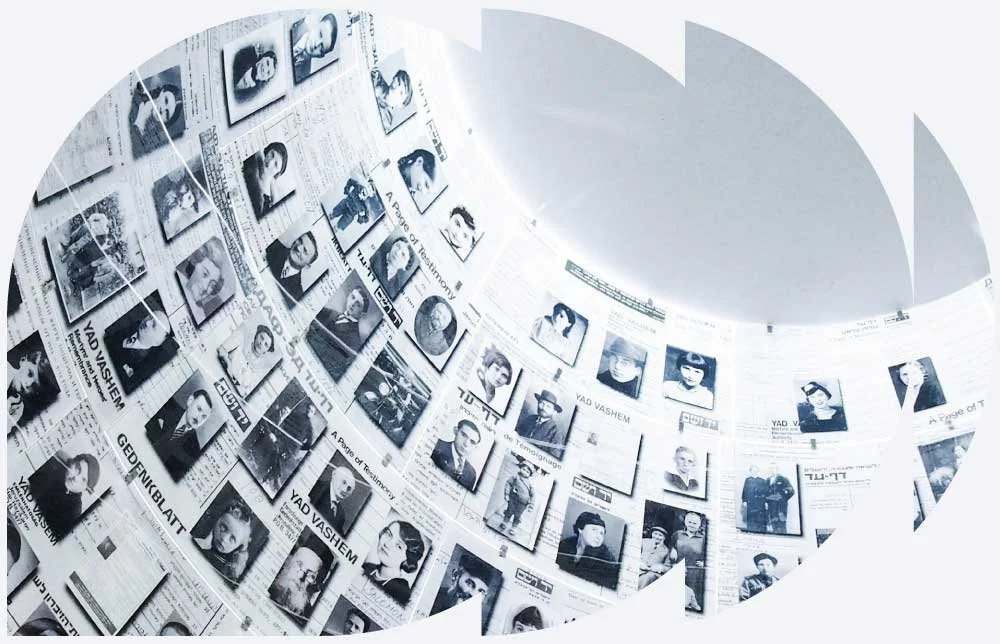
Cultural judgment.
Knowing a language is not the same as understanding what a text means in its cultural context. Sometimes a literal translation works. Sometimes it misses the point entirely. AI still doesn’t understand what it means to be human.
Nuance and voice.
Humour and irony spice up our language. Dialects and an author’s distinctive voice can also be difficult to carry across into another language. These are such complex areas that they can challenge even seasoned professionals in interpreting.
Context.
A text can be grammatically flawless and still miss cultural references, historical connections, or the point it is actually trying to make. Of course, you can feed an AI thousands of texts. But give us a few conversations with the people involved, and we can often sense what hasn’t been said.
Confidentiality.
Not every text belongs in an AI tool. For many texts and meetings, using AI is actually prohibited.
Burying your head in the sand isn’t the answer, either.
One principle I find useful is Michael Bailey’s Expert in the Lead (XITL): technology should support expertise, not dictate how the work gets done.
Which texts are suitable for AI-assisted translation? When is human review enough, and when is a specialist translation the better choice from the start? And when does interpreting – with a person making judgments in real time – call for human expertise throughout?
Those are decisions I can help you make.
One small disclaimer: I don’t offer post-editing of machine-translated (MTPE) texts. I’m not particularly keen on putting my linguistic and cultural expertise into machine-translated text just to make it a little better. It’s simply no fun at all.
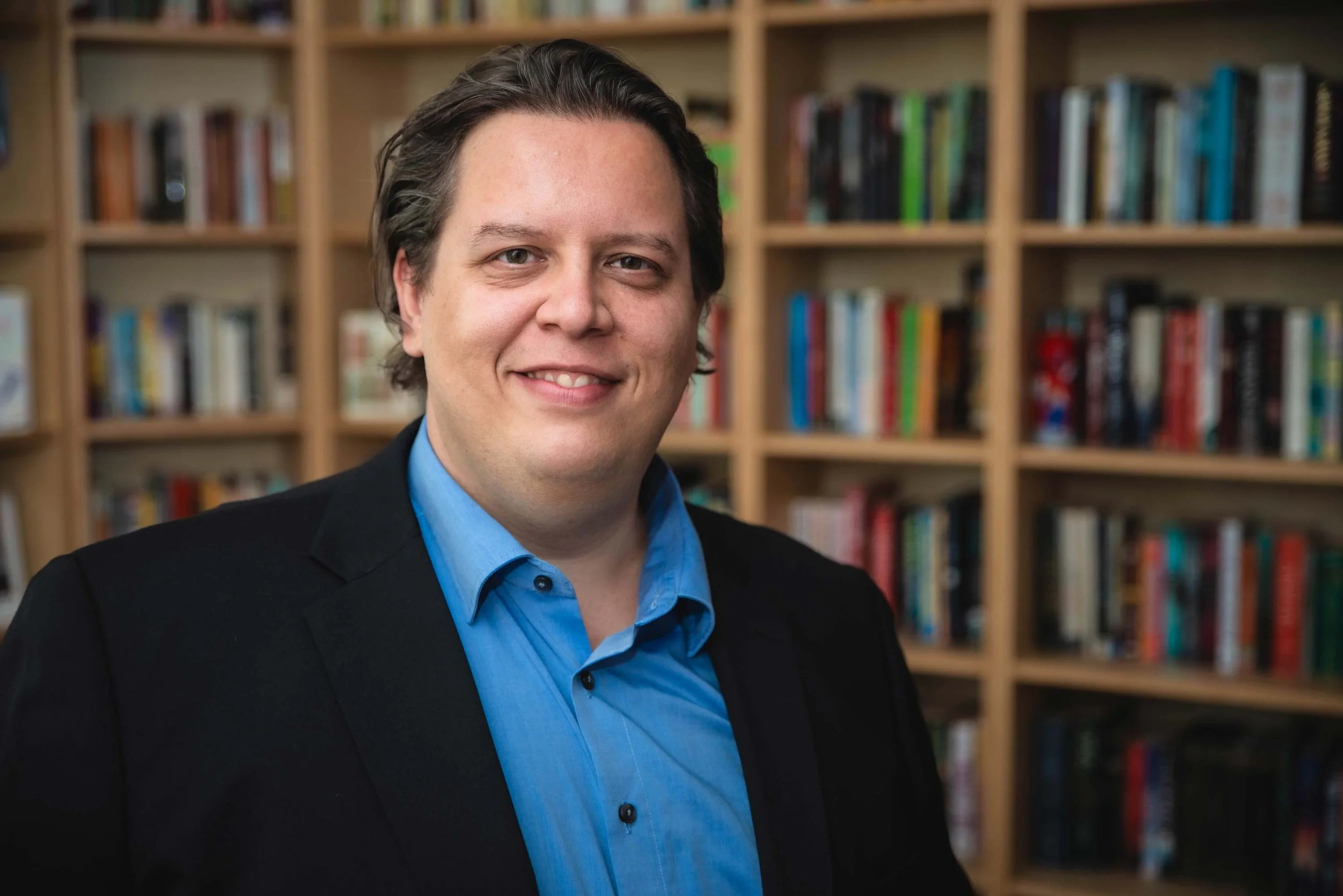
Let’s Speak Stevens.
And a little about me.
Growing up in an American-Austrian family meant navigating two sets of languages, traditions, religions, and cultural peculiarities. It probably explains why I’ve always been curious about how people make sense of the world – and why the same thing can mean something entirely different depending on where you stand.
That curiosity took me to the University of Vienna, where I studied conference interpreting as well as social and cultural anthropology. I managed two full-time degrees while working part-time, spent time at the University of Illinois at Urbana-Champaign, worked in Milan in software and video game development, and conducted anthropological research in New York City. Not exactly a straight line into translation, but looking back, it makes sense.
In 2026, I launched SpeakStevens after nearly twenty years in the language industry. I wanted to bring my different strands of work together and make more room for projects where language carries something bigger than information. Museums, books, films, conferences: different formats, but the same underlying interest in how stories travel.
I’m based in Vienna, which is a pretty good place to be if you like museums. When I’m not working, I’m usually reading fiction rich in cultural detail, fantasy, science fiction, or young adult and new adult novels. At the last book festival I attended, I came home with around 50 books. Roughly a year’s reading – I regret nothing.
That’s the thinking behind SpeakStevens: language, culture, and storytelling, with an eye on the world behind the words.
Making Culture Speak.
Qualifications
MA in Conference Interpreting
University of Vienna
Magister (MA) in Social & Cultural Anthropology
University of Vienna
BA in Transcultural Communication
University of Vienna
Professional Memberships
How we'd work together
How we'd work together
How we’d work together
Step 1Get in touch
Tell me what you’re working on, and I’ll ask the questions that matter: Who’s the audience? What’s the context? What do you need the language to do? Then we take it from there.
Step 2Non-binding quote
Every project is different, so I don’t work from a fixed price list. You’ll know the cost before anything begins.
Step 3NDA if needed
Confidentiality is part of the job. If you need an NDA, I’m happy to sign one before any material changes hands.
Step 4Delivery
For a single project, or as a long-term part of your team – whatever works best for you.
Have project in mind?
A museum exhibition.
A book.
A documentary.
A conference.
A difficult text that needs someone to actually think about it.